



In our fast-paced world of B2B SaaS, it’s easy to get caught up in the “launch and repeat” cycle. We often find ourselves checking off boxes instead of checking in with our market and customer. But there is a higher level in product marketing for us: moving from a tactical executor to a Trusted Advisor.
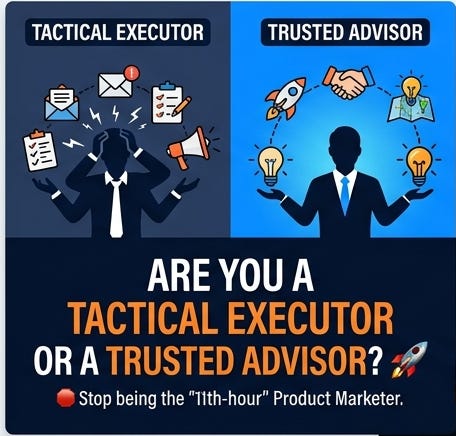
Being a Trusted Advisor isn’t about a title or role. It’s about how we show up.
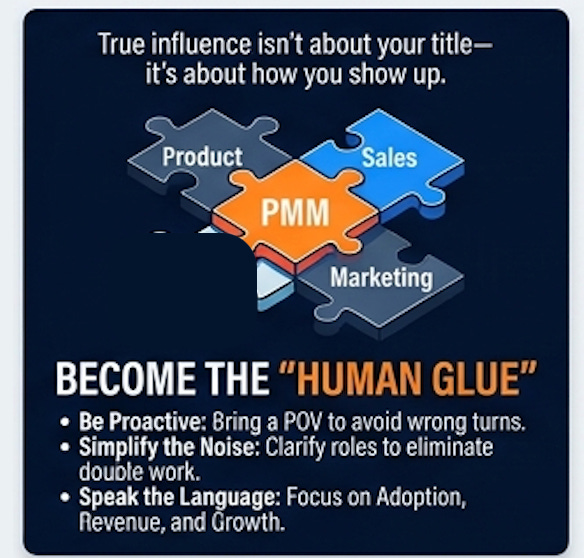
Product marketing is the “human glue” of an organization. When we shift our focus from tasks to outcomes, we stop being support and start being true partners.
Reflection:
What’s working well with your stakeholders in product, marketing and sales at your company today?
Where do you see the right opportunities for growth and improvement in product, marketing and sales?
Collaboration Journey
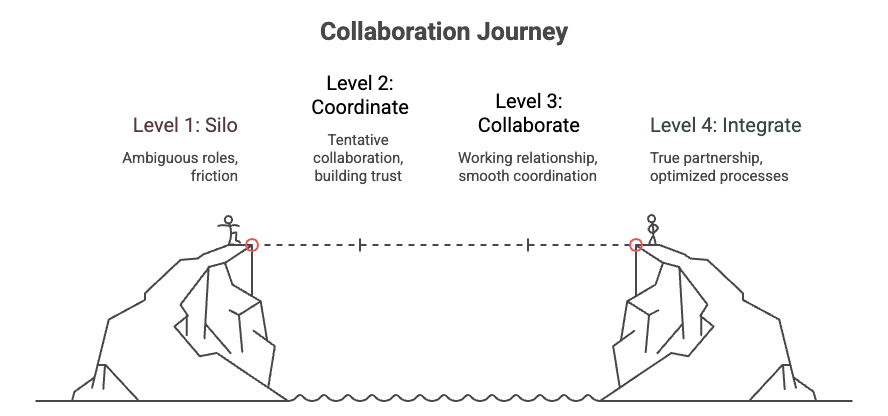
True influence is built over time. In our workshop, we looked at four levels of collaboration:
Silo: We work in bubbles. Roles are blurry. We’re just checking boxes.
Coordinate: We talk, but the trust isn’t quite there yet. We aren’t yet aligned.
Collaborate: We have a rhythm and a shared roadmap. The trust is building.
Integrate: We are true partners. We don’t just execute the “what,” we shape the “why.” We are the voice of the customer in every room.
Heart of the PMM Journey
To build real influence, we have to move through different stages of partnership. It’s a evolution from being siloed to being integrated.
“Collaboration is not just about working together; it’s about building a foundation of trust where you can challenge each other and grow.”
Speaking the Same Language
To be a Trusted Advisor, you have to care about what your stakeholders care about:
Product wants to see people actually using what they build (user adoption)
Marketing wants high-quality leads that don’t cost a fortune (CAC, CLTV)
Sales wants to win and win fast (revenue and time-to-close)
Journey to Trusted Advisor
Tactical → Strategic | Execution → Insight | Output → Outcome
How to Show Up as a Trusted Advisor
So, how do you know you’ve made the leap? Look for these signals:
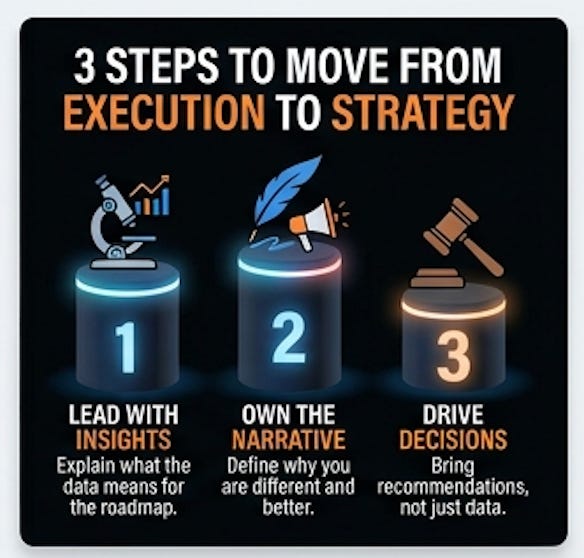
Lead with Insights: Don’t just report the news; tell the team what the news means for the roadmap.
Instead of just sharing a competitor’s new feature, explain why it matters to your roadmap. This is how you help Product teams reduce churn and drive adoption.
Own the Narrative: Be the person who defines why we are different and better.
I’ve often said that if we don’t tell our story, someone else will. A Trusted Advisor creates the differentiated value that makes Sales more confident.Drive Decisions: Don’t wait for permission. Bring a recommendation to the table that helps the team move forward.
Don’t just present data; present a path forward. Simplify the noise so the team can focus on what really moves the needle.
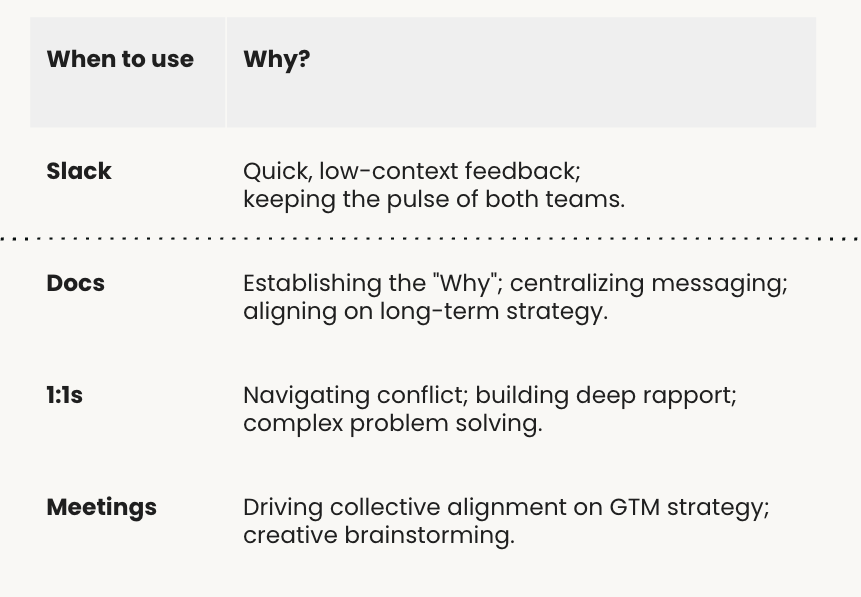
Here is how we can deepen the trusted advisor journey.
1. PMM Hero’s Journey
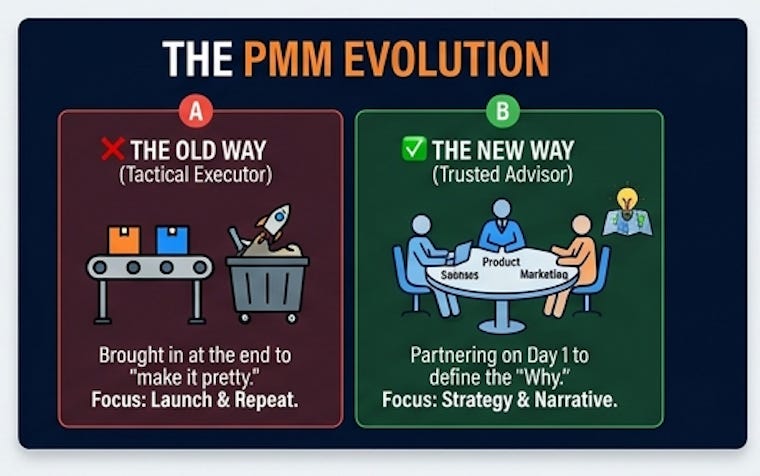
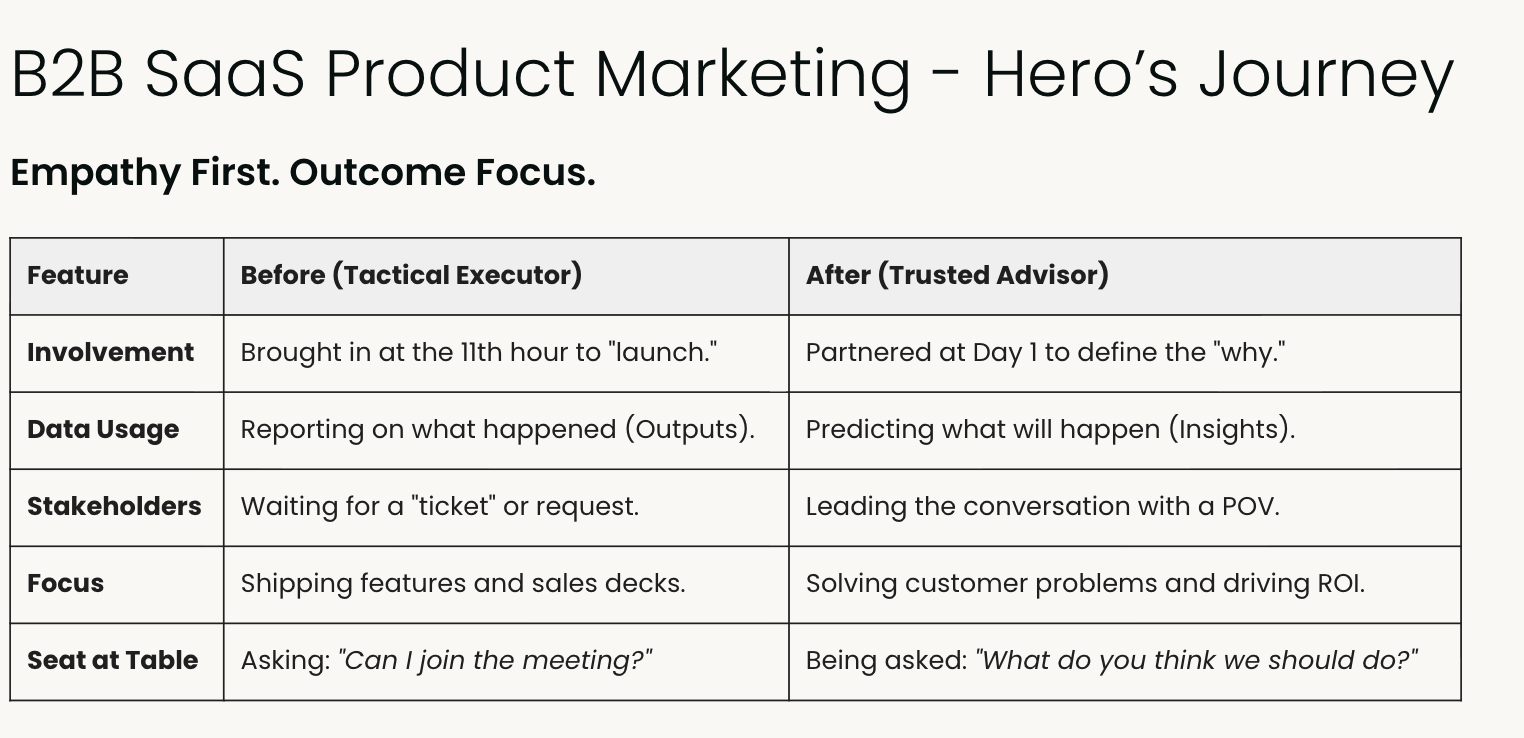
In my B2B SaaS experience, there is a powerful “Before vs. After” comparison that we can use to show the transformation. It’s about moving from Outputs (shipping decks) to Outcomes (driving ROI).
Shift: Instead of asking “Can I join the meeting?”, a Trusted Advisor is asked, “What do you think we should do?”
Action: Moving from being brought in at the “11th hour” to launch, to being a partner on “Day 1” to define the “Why.”
2. Empathy First (Human Glue)
Being a Trusted Advisor isn’t just about data; it’s about Empathy First.
Acknowledge that the transition is hard because it requires building relationships and high professional trust.
3. Solving the Double Work
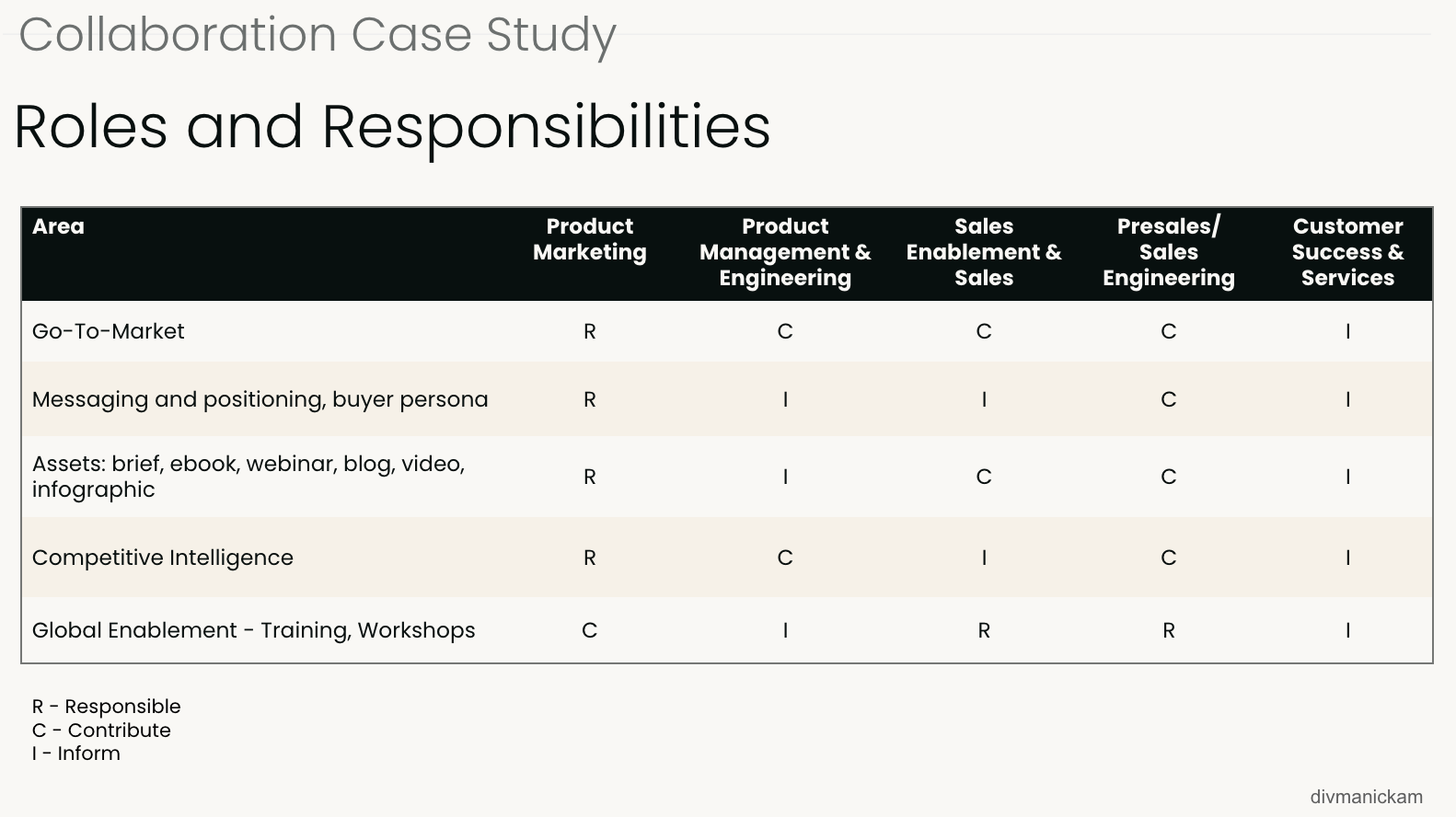
One of the real-world PMM pain points identified is the lack of Role Clarity.
A Trusted Advisor doesn’t just do more work; they clarify who owns what (using RACI) to eliminate “double up” work and “simplify the noise.”

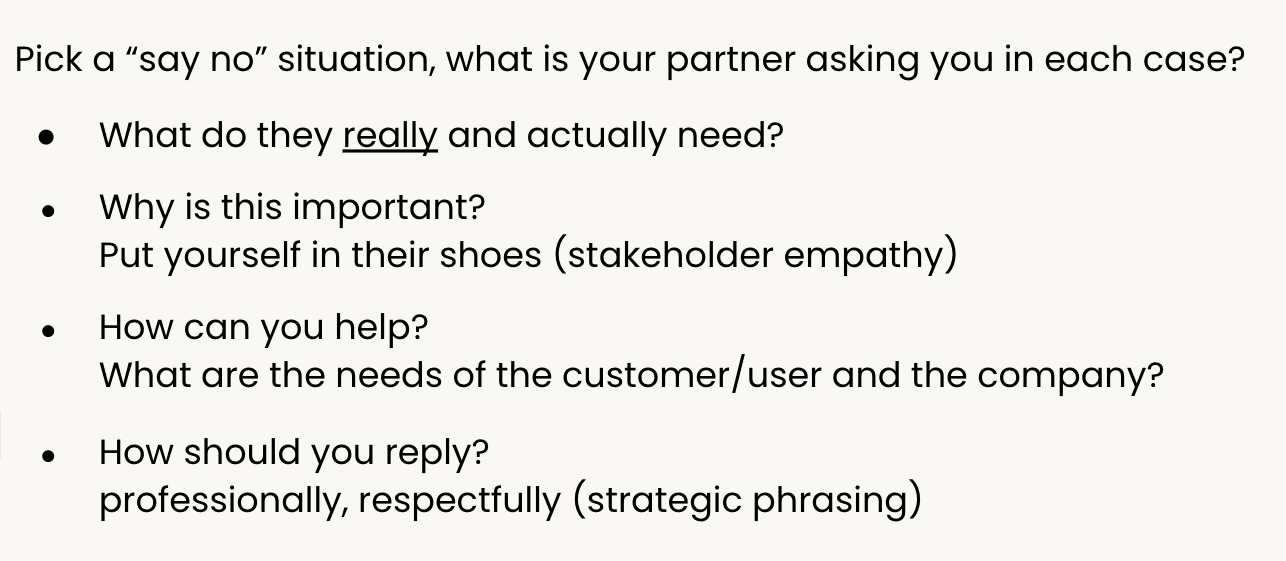
4. Power of No (Proactive vs. Reactive)
Trusted Advisor is not a “support” function.
You aren’t providing a service or waiting for a “ticket.”
You are bringing a POV that helps the team avoid wrong turns in go-to-market.
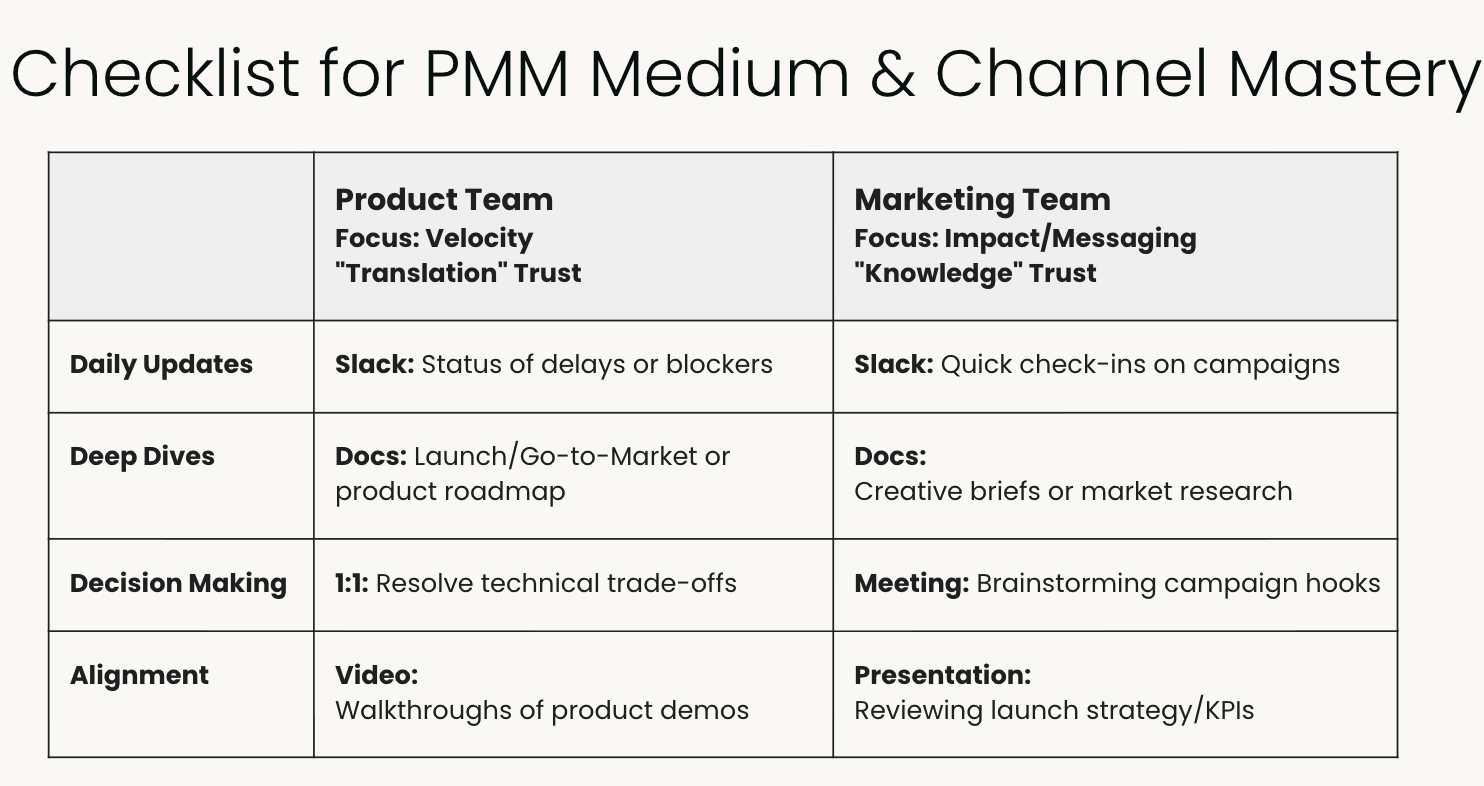
Actions for Today

Simplify the Noise: Look at one fractured workflow this week and find a way to make it easier for others to access information.
Be Proactive: Instead of waiting for a “request,” bring one fresh competitive insight to your next Product, Marketing or Sales meeting.
Connect the Dots: Reach out to one person in Product, Marketing and Sales to understand their biggest hurdle in closing deals right now.
When we move from doing the work to owning the outcome,
we don’t just help the business grow — we grow, too.