



We often talk about Brand and Product Marketing as two separate teams.
Brand is the “feeling,” and Product is the “function.”
But the magic really happens when they work as one.
Magic happens when we stop treating them as silos and start seeing one cohesive narrative.
Here are 3 takeaways on how to bridge the gap:
1. Positioning is a Team Sport: Don’t treat Brand as a “wrapper” at the end. Start together so the product’s function matches the brand’s feeling.
2. Power of Narrative: Technical features provide the “how”, and Brand provides the “why”. A great story turns a tool into a solution that resonates.
3. Find Your Shared Pulse: Alignment doesn’t happen by accident. It requires a shared GTM engine where both teams are held accountable for the same North Star.
Product marketing is the bridge, and brand is the soul.
When they click, the customer doesn’t just buy a product—they join a mission.
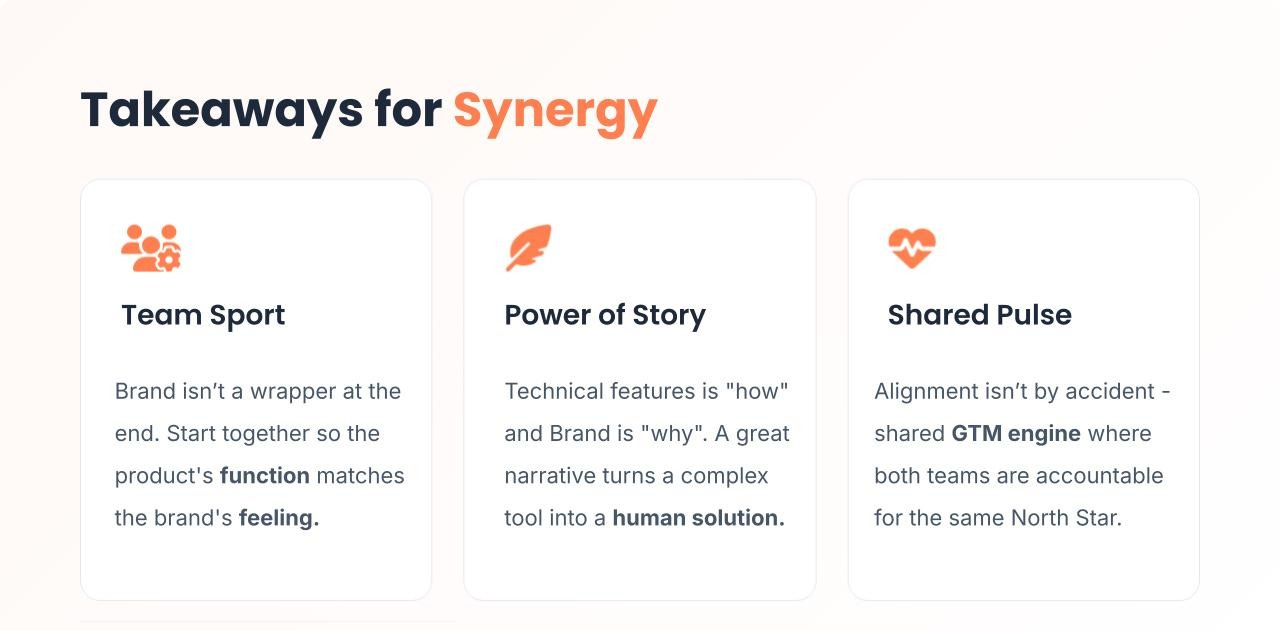
Positioning is a Team Sport
If the brand identity isn’t baked into the product roadmap, the message feels hollow.
Insight: Build together from Day 1 to ensure the “function” matches the “feeling.”
Power of Story
Product provides the “How” (features & specs).
Brand provides the “Why” (mission & emotion).
Insight: A great story turns a technical tool into a human solution.
Based on my experiences, here is how we can build the bridge across both teams.
1. Big Win: Find the “Secret Sauce”
A “big win” isn’t just a successful launch; it’s when the customer doesn’t see the seams between the story and the tool.
Example: Think of a launch where the brand promise is “simplicity” and the product actually delivers a one-click setup.
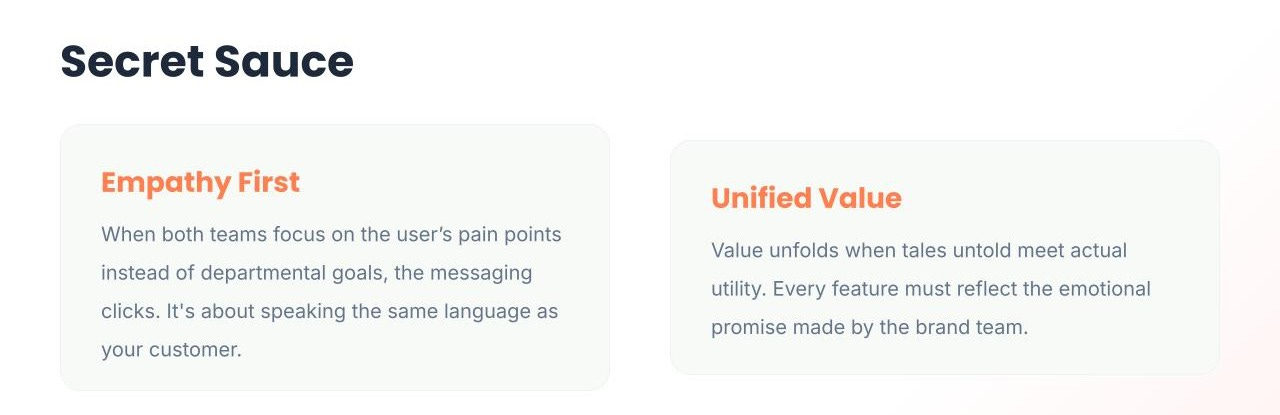
Secret Sauce: It’s empathy. When both teams focus on the user’s pain instead of their own department goals, the messaging clicks perfectly.

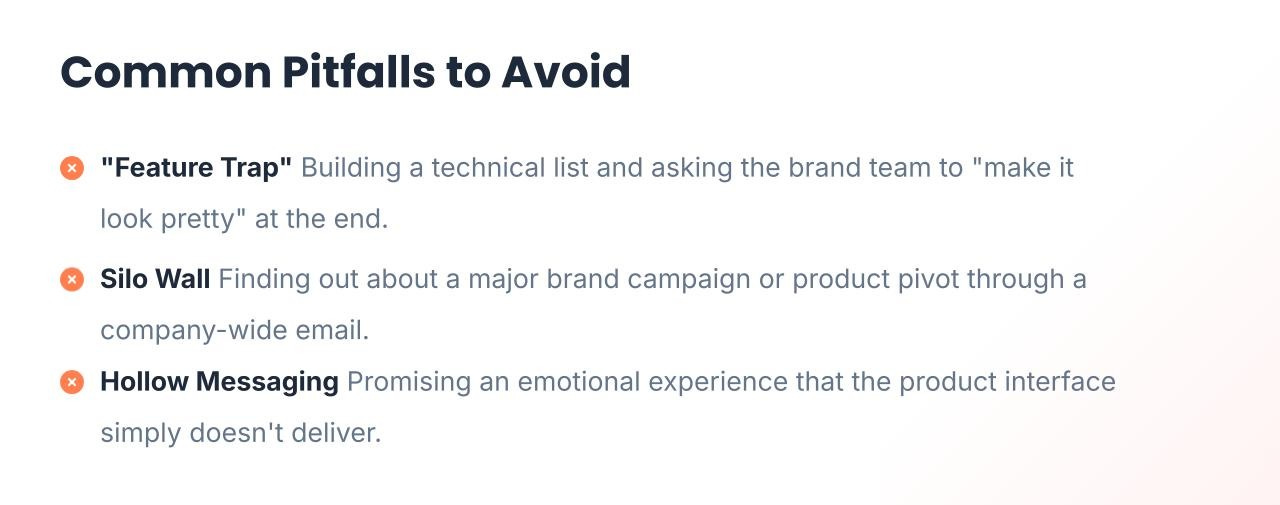
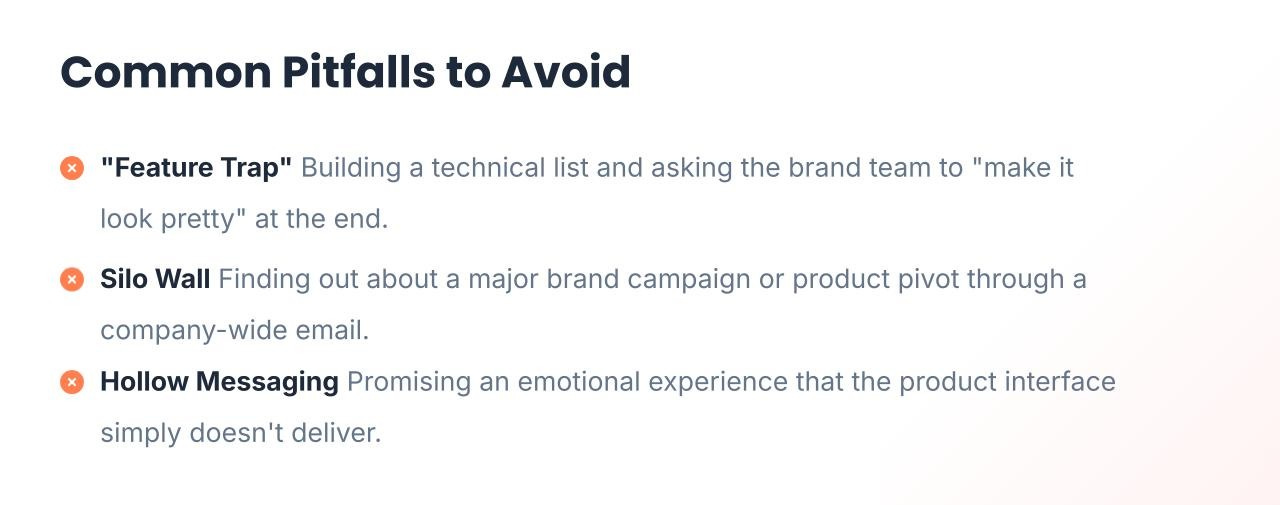
2. Reality: Avoid the “Feature Trap”
The most common mistake? Treating brand like a “wrapper” you put on at the end.
Mistake: Product builds a list of features, and asks Brand to make it look pretty.
Fix: Start together. As I often say, positioning is a team sport. If the brand identity isn’t baked into the product roadmap from day one, the message will feel hollow.

3. Pivot: When the Message Doesn’t Fit
I’ve seen moments where we have a great product feature or service offering that just doesn’t “sound” like us.
Shift: We once had a highly technical update that felt too “cold” for our human-centric brand.
Lesson: We had to strip back the jargon and focus on the benefit rather than the feature. We paused the launch to ensure the tone matched our brand’s voice. It’s okay to slow down to stay true to who you are.

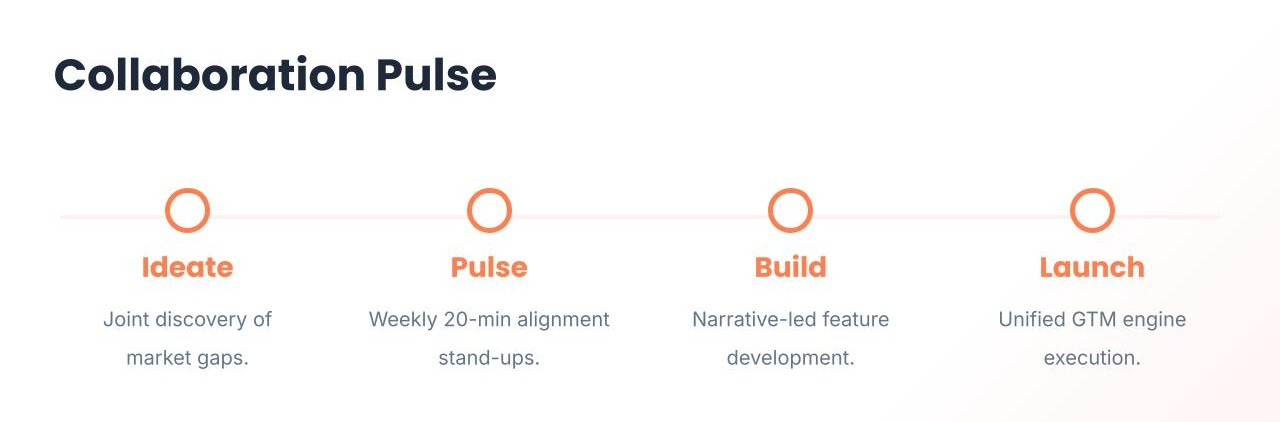
4. Collaboration: Weekly “Pulse”
How do we stay on the same page? It’s not more meetings; it’s about the right ones.
Ritual: Try a “Weekly Pulse” session. It’s a 20-minute stand-up where Brand shares the “Creative North Star” and PMM shares the “Product Reality.”
Why it works: It prevents surprises. No one likes finding out about a new brand campaign or a product pivot through an email.
Find Your Shared Pulse
Alignment doesn’t happen by accident. Establish a shared GTM engine and a single North Star metric.
Insight: When both teams are held accountable for the same goal, silos disappear.

5. Vision: Partnership of the Future
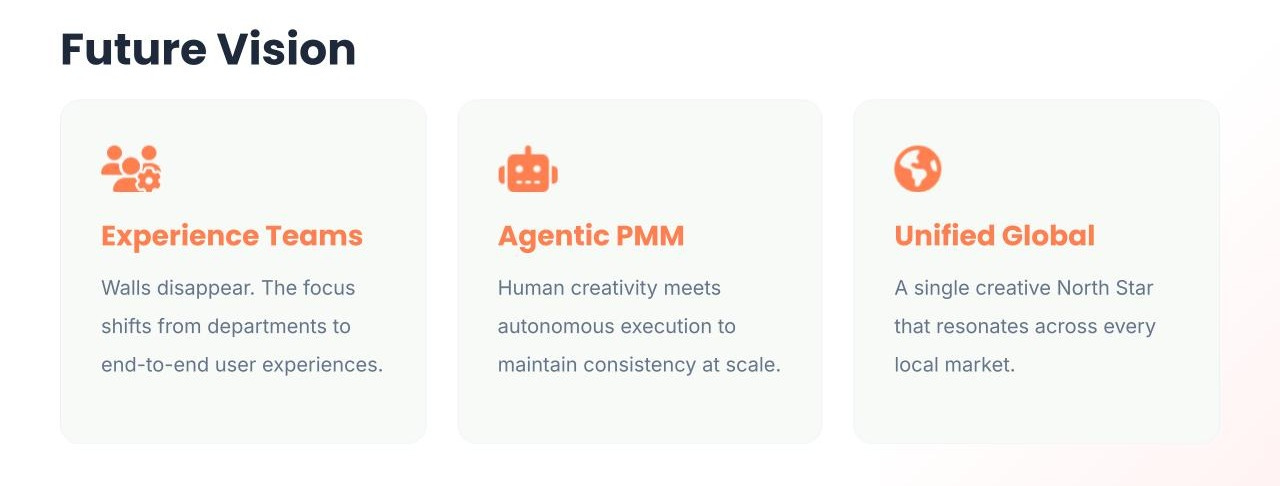
In a few years, I believe the “walls” will disappear.
From Partnerships to Experience Teams
Future: Most successful companies won’t have “Brand vs. Product.” We will have one unified Customer-led Experience Teams.
Goal: We are moving toward a world of “Agentic PMM” and AI-driven insights, where the brand is the soul and the product is the body. They won’t just partner; they will be inseparable.
Agentic PMM: Gemini Enterprise

Product Marketing (PMM) moves fast. Deep voice of the customer research and messaging used to take weeks. Now, it takes minutes. By 2026, Agentic AI has shifted the focus from “chatting” to “doing.”
Join us on PMM talks to hear from our experts on Brand Marketing.
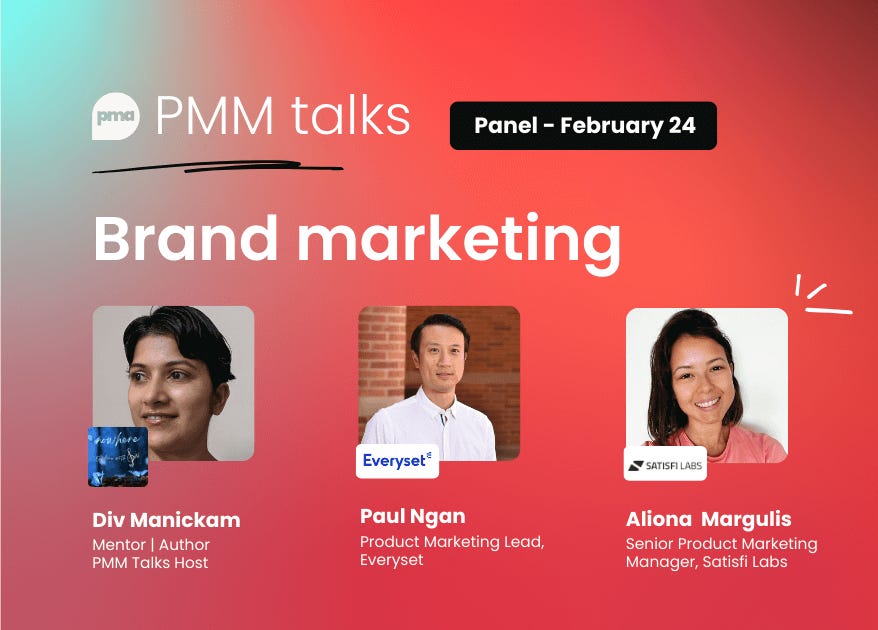
Big Win: Can you share a time when brand and product marketing clicked perfectly? What was the “secret sauce” that made it work?
Reality: What is a common mistake teams make when trying to align these two functions, and how can they avoid it?
Pivot: Have you ever had to change a product message because it didn’t fit the brand’s identity? How did you handle that shift?
Collaboration: What is one specific ritual or meeting your teams use to stay on the same page every week?
Vision: In five years, how do you think the most successful companies will have redefined the "perfect partnership" between brand and product marketing?