
AI Frontier: Balancing Individual Creativity with Enterprise Control
Navigating the AI Rabbit Hole


What a week exploring the frontier of AI!
From volunteering with the incredible community at WomenxAI during the Snowflake Summit to heading down the AI rabbit hole, it’s been a whirlwind of great conversations and insights.
WomenxAI - thanks Jenny & Reut for the opportunity to volunteer at the Snowflake summit and to attend AI Rabbit Hole this week.

Journey to Treasure Island
I couldn’t remember if I had ever been to Treasure Island before, and taking the Muni Bus 25 from the SF Salesforce Transit Center was a fun 15-minute mini-adventure.

The event itself, AI Rabbit Hole was Alice in Wonderland themed. From the “AI Bubble Tea Party” concept to the playful decor, it was honestly cute and well done. A creative soul at heart, I appreciated the spark of play and curiosity.


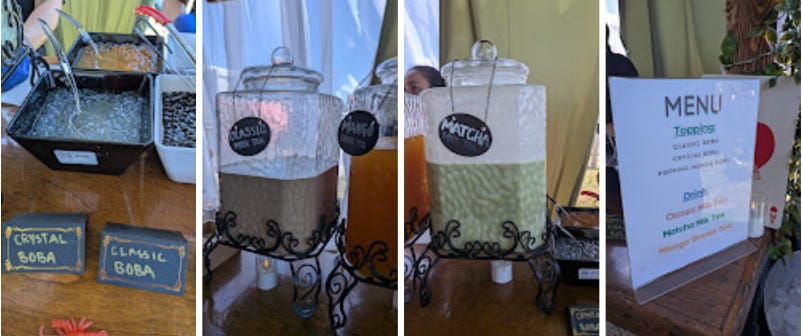
Beyond the fun theme, the content was grounded. Here are the highlights:
Takeaways from the Frontier
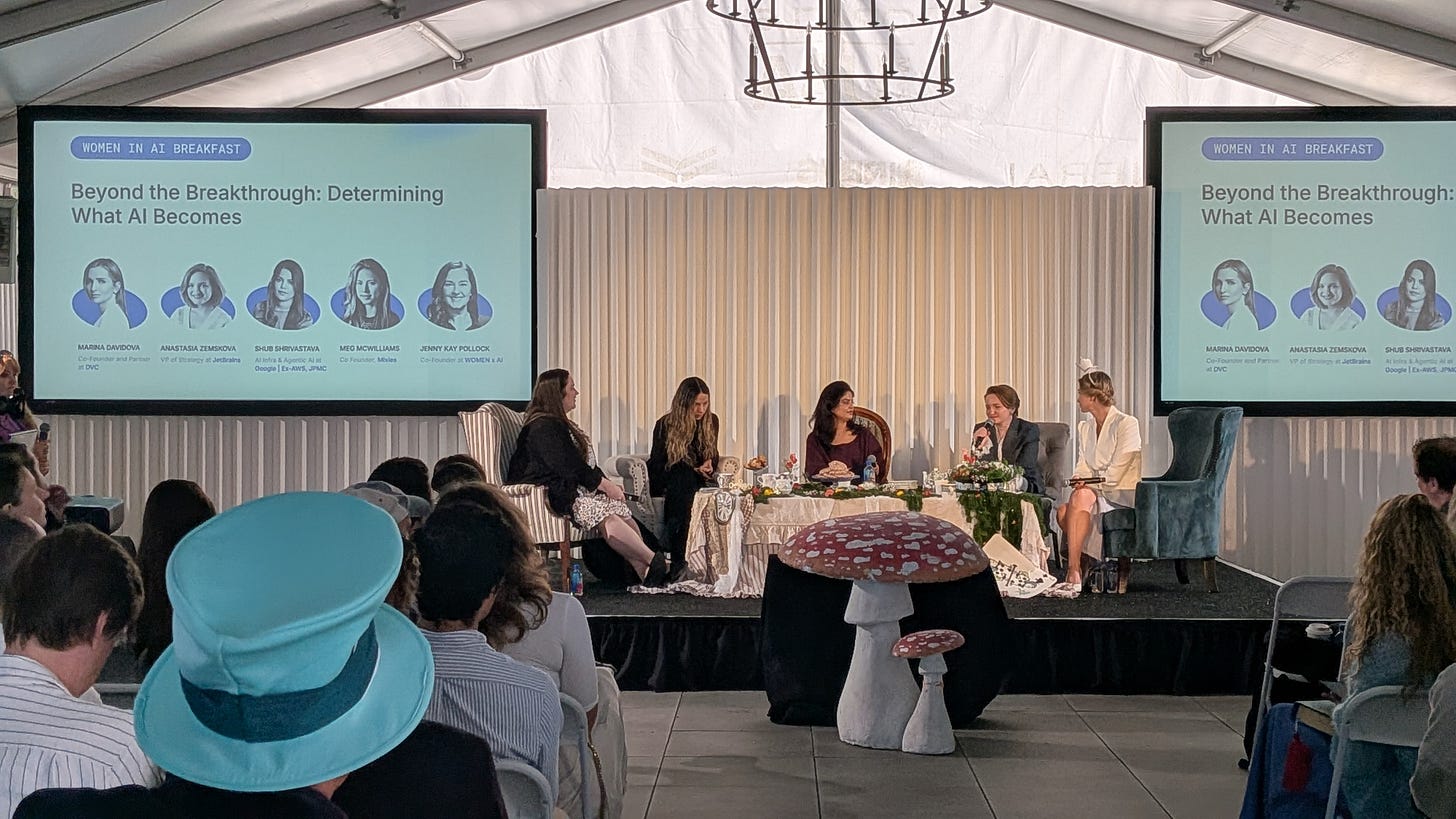
1. Women in AI Breakfast & Stanford’s HAI Index
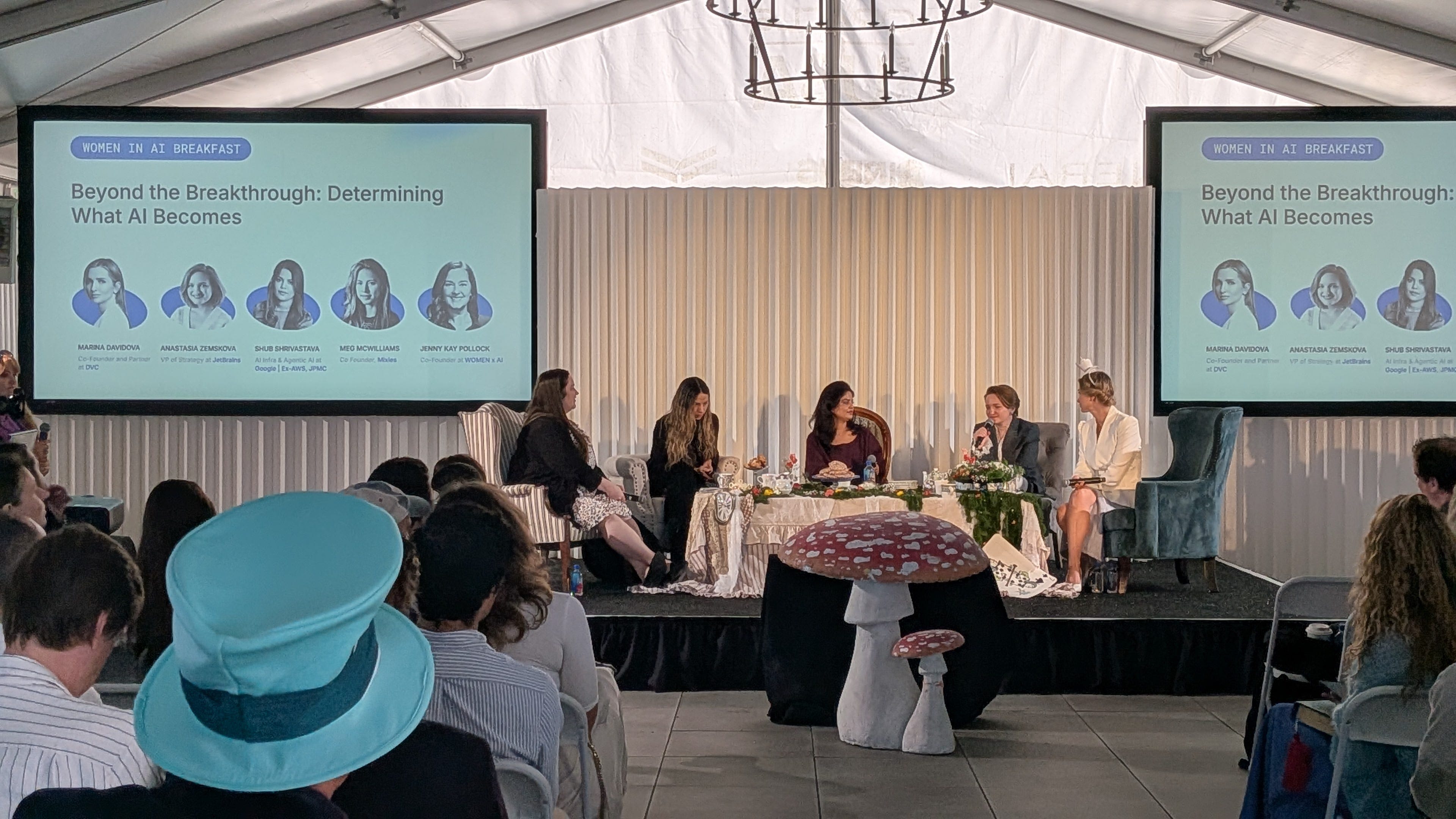
Kicked off the morning with a brilliant panel featuring Marina Davidova, Anastasia Zemskova, Shub Shrivastava, Meg McWilliams, and Jenny Kay Pollock.
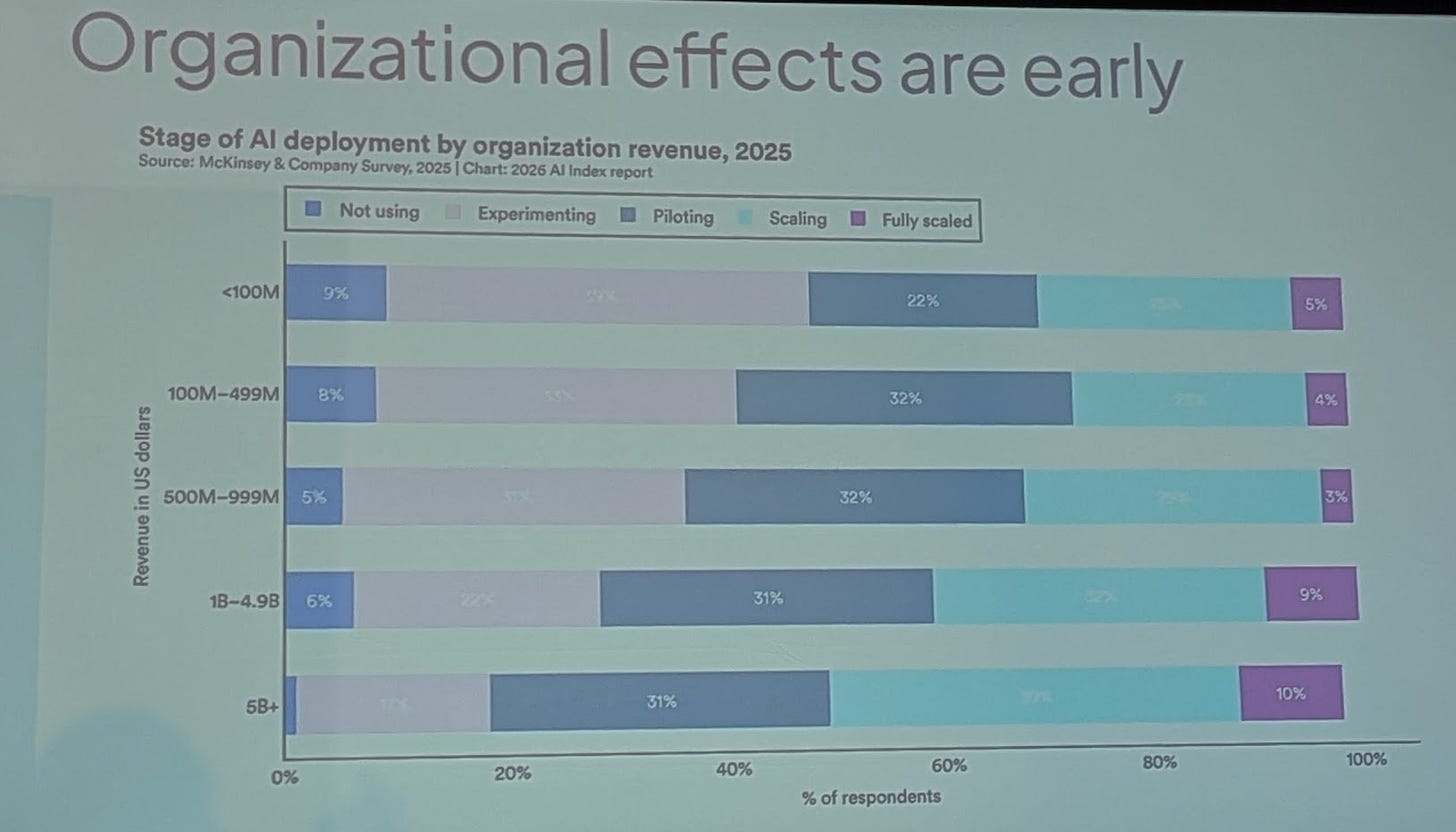
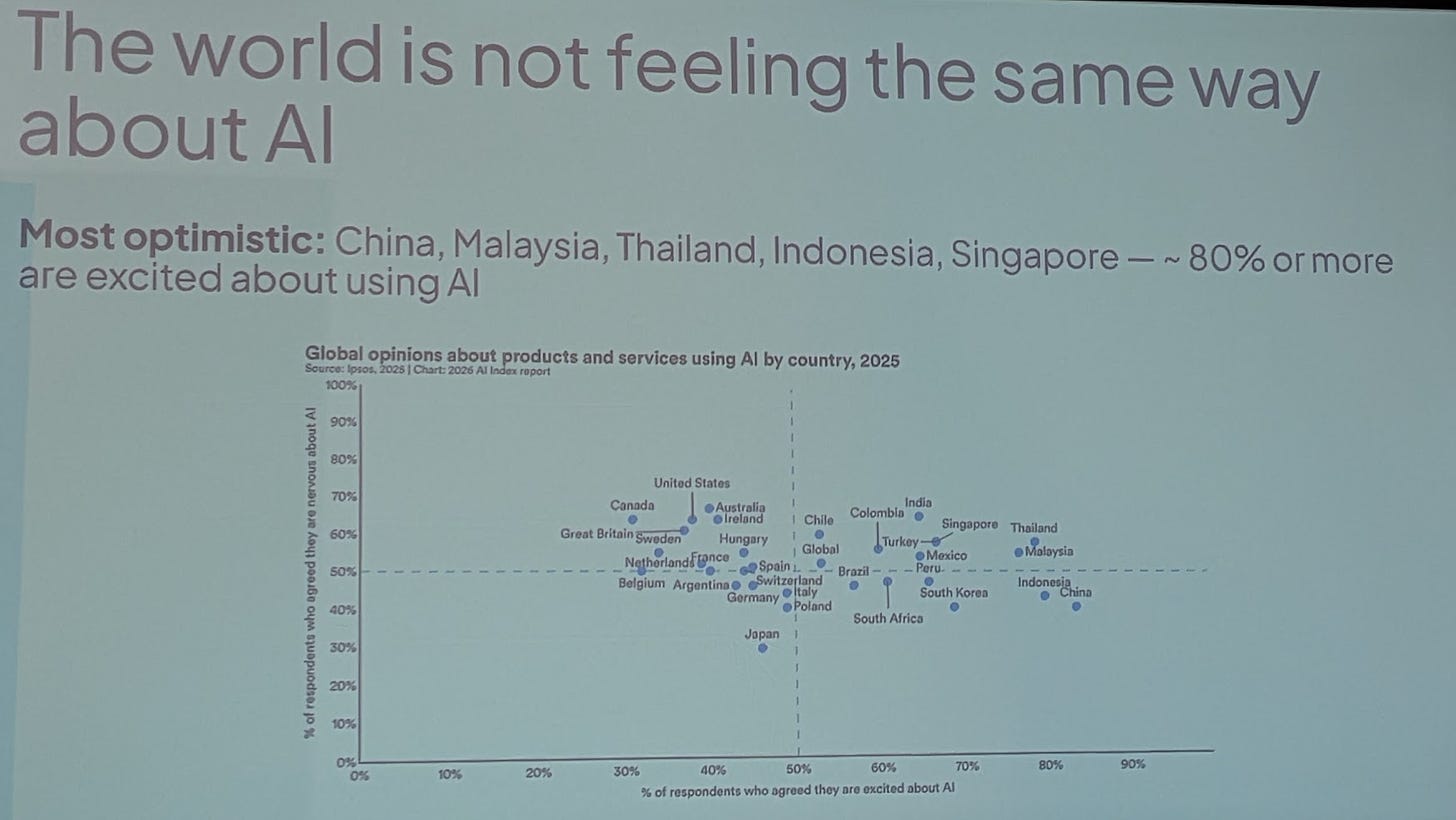
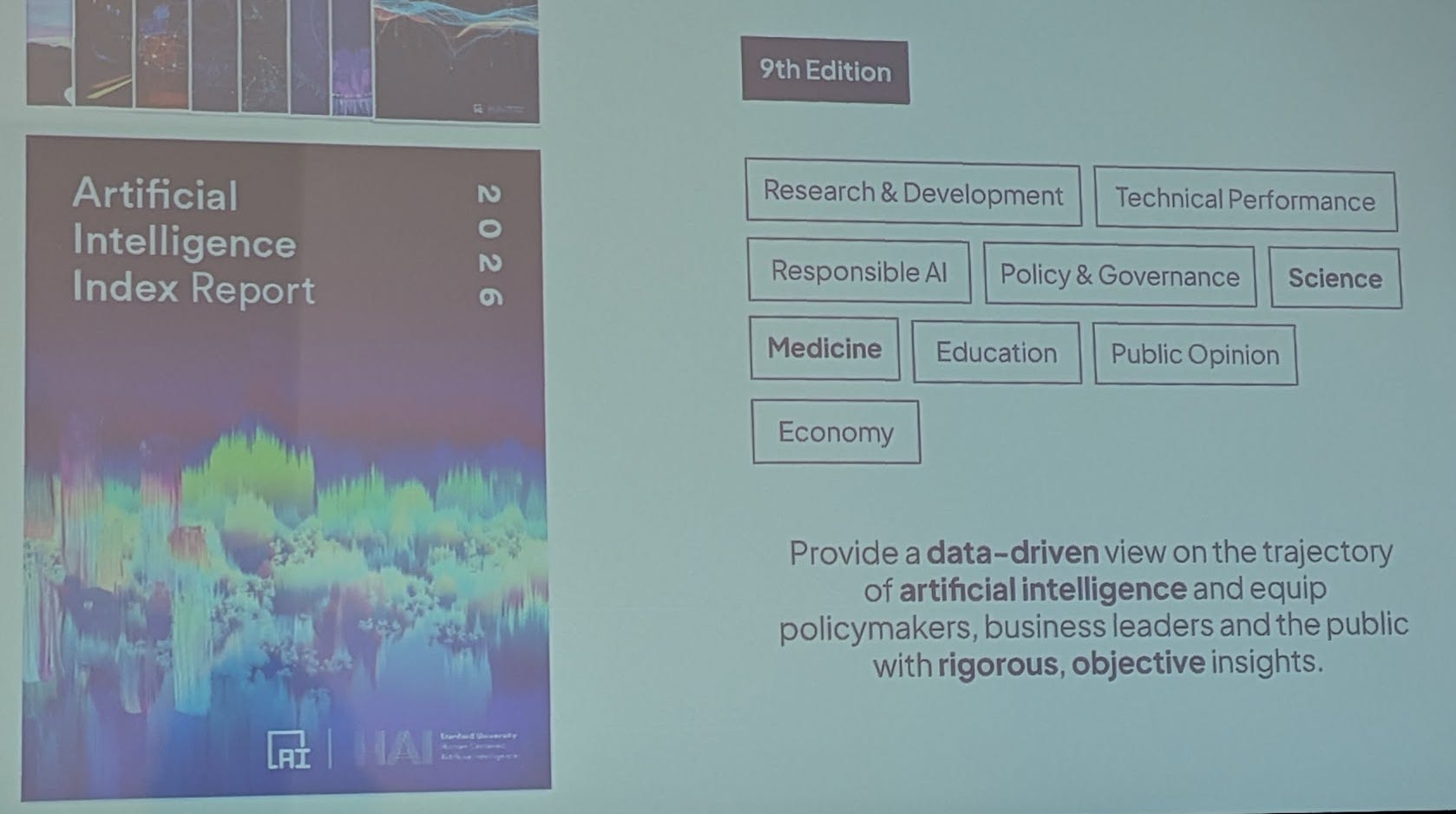
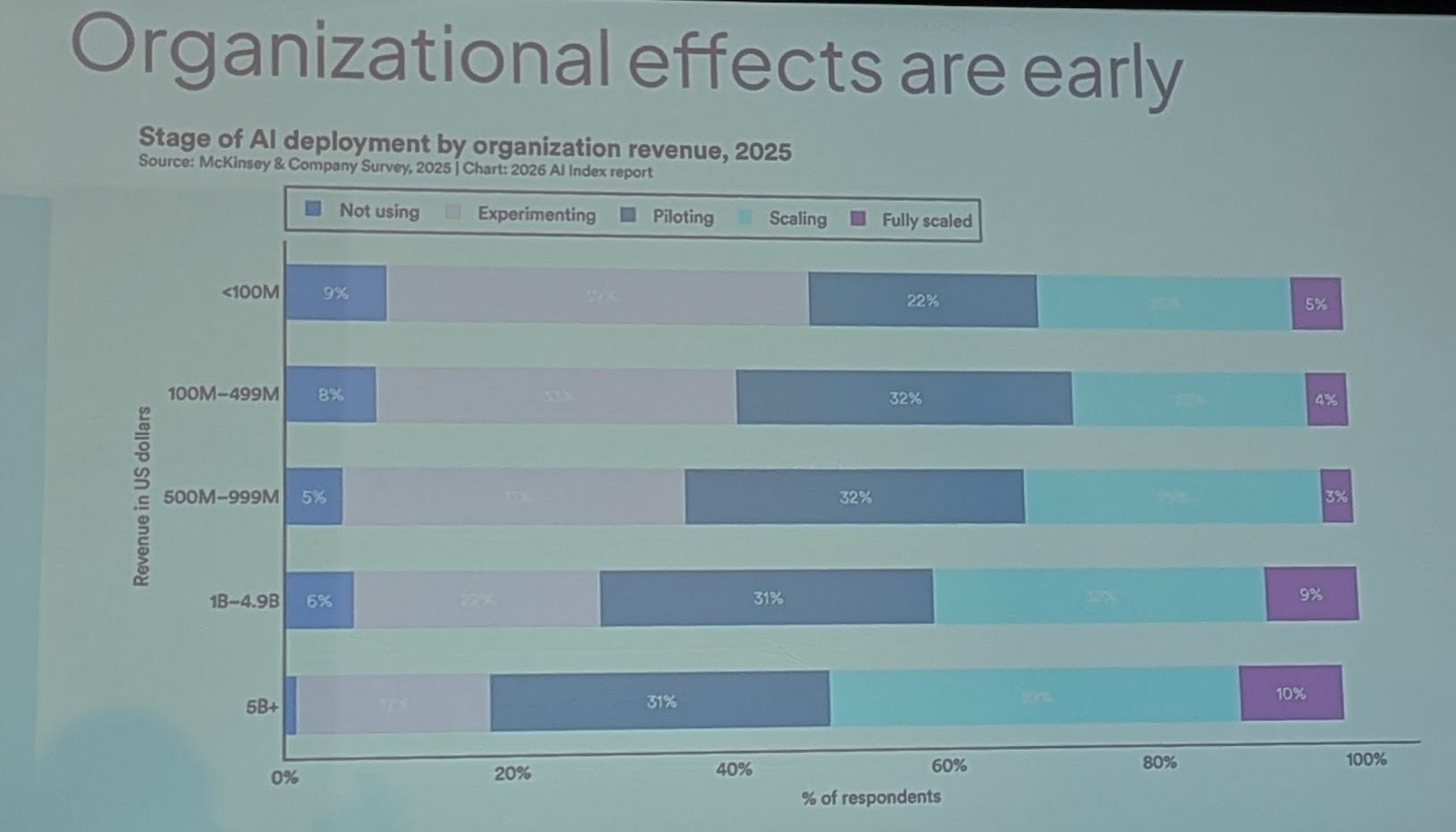
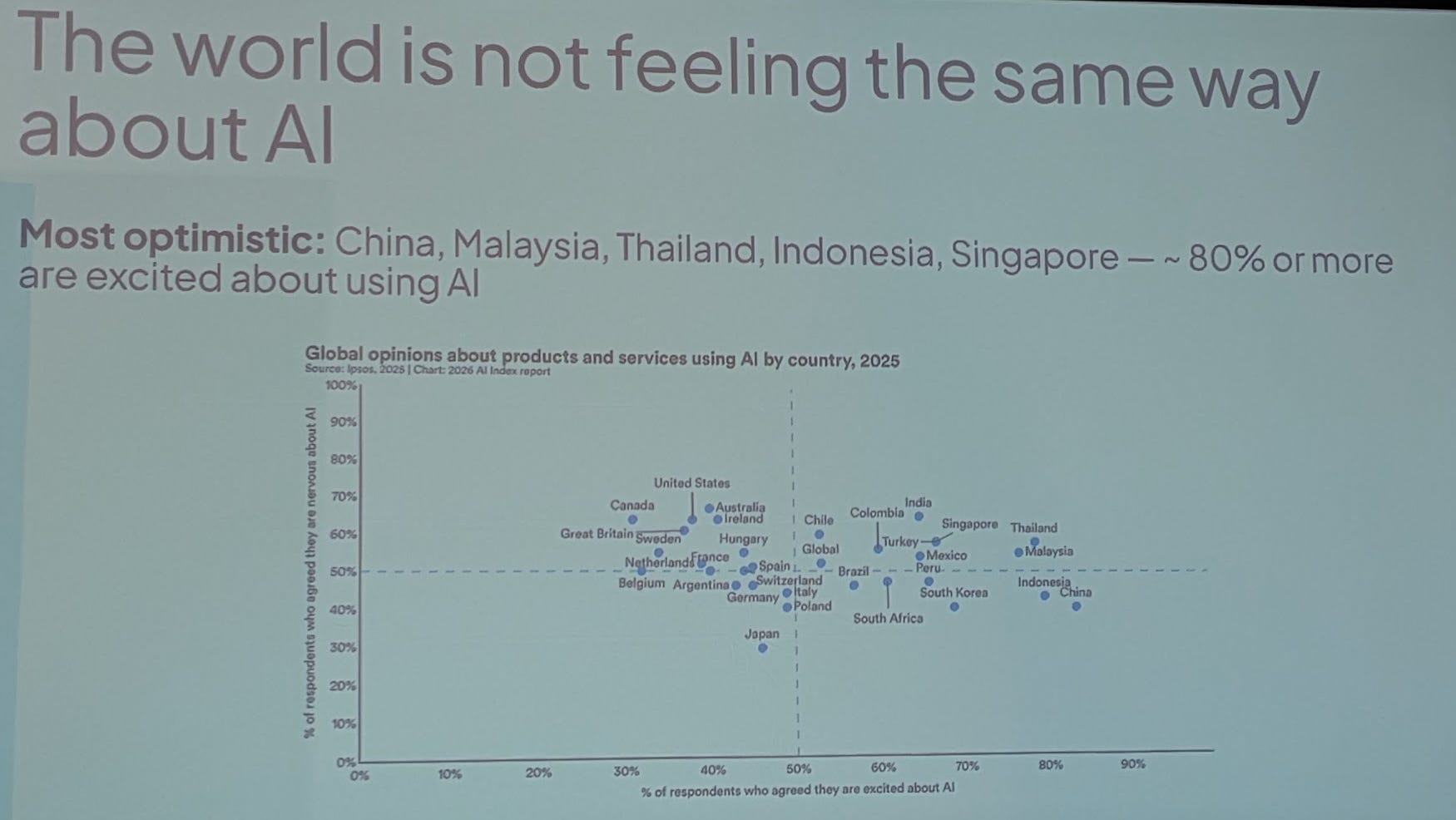
Vanessa Parli, Stanford shared insights from the HAI 2026 AI Index Report. Theme - Shifting focus from purely training models to inference-time scale.
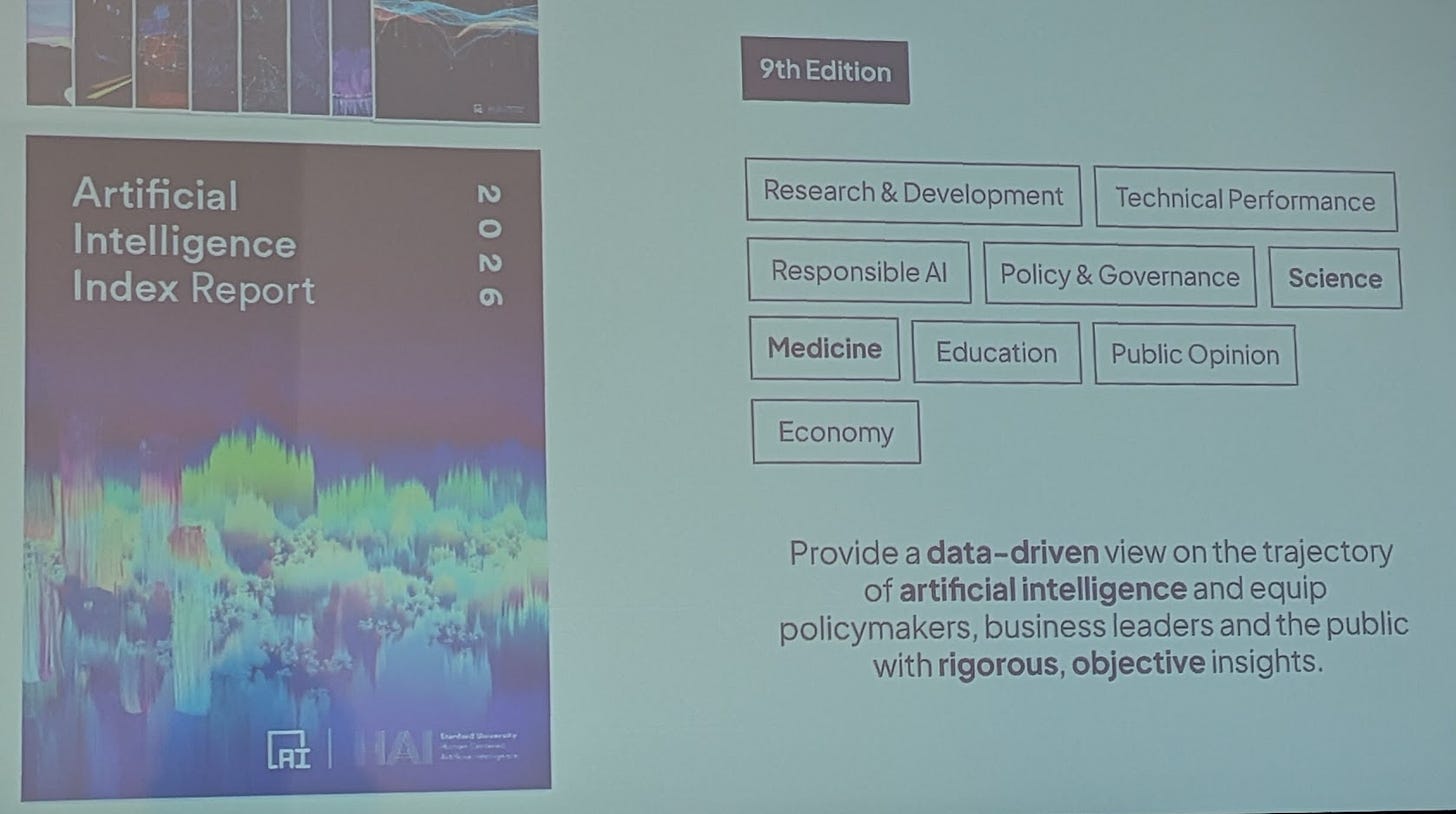
2. Team Growth & GTM Leadership (Nebius)
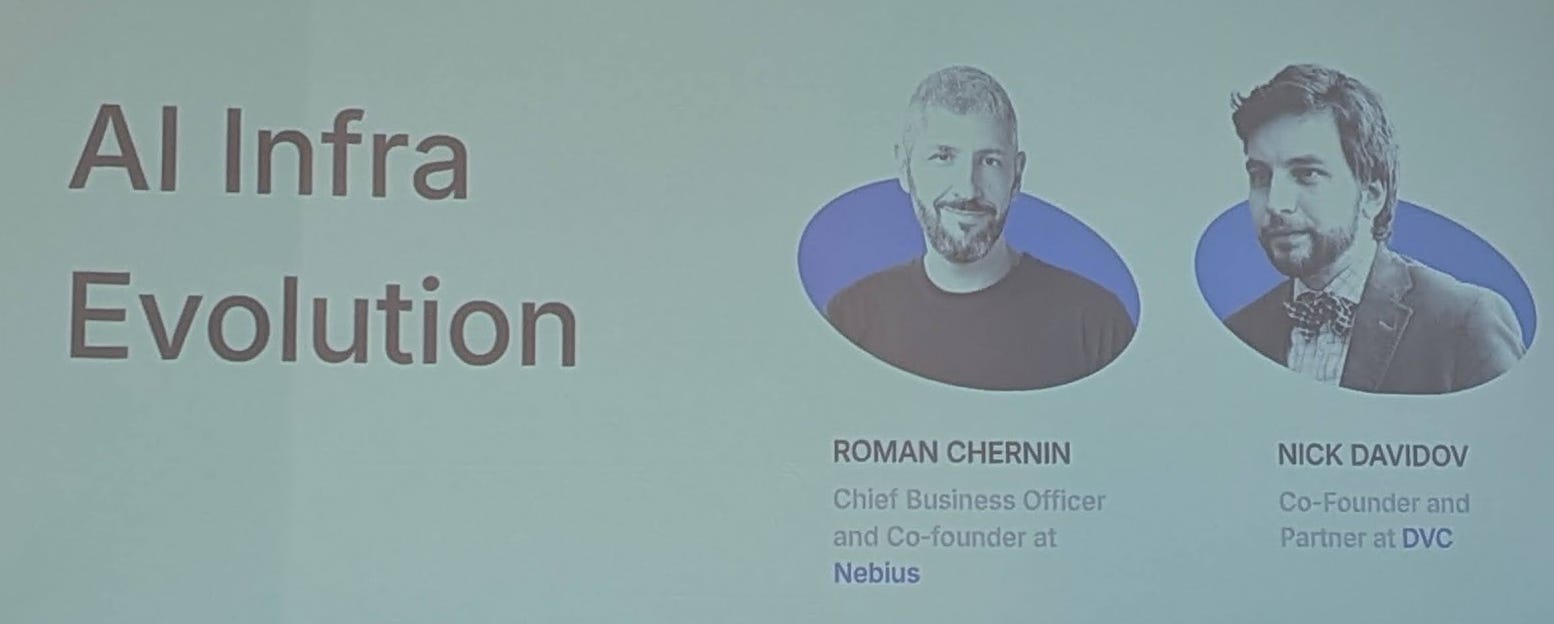
Roman Chernin shared his journey growing from $100M to $10B+ in two years.
Founder advice: “If you don’t sleep, you will die.”
Managing multi-cultural, cross-border teams takes intentional alignment (GTM in the US, engineering in Russia, finance in Israel). Each step and decision led to the company today.
3. Developer Experience & Enterprise Agents (Neon / Databricks)
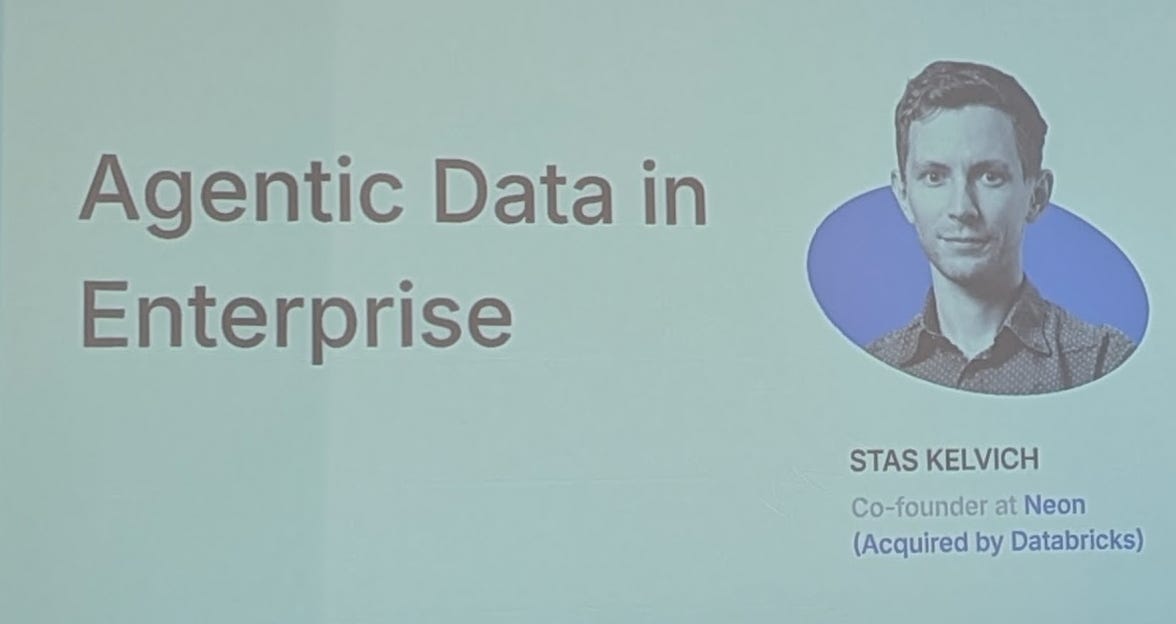
Stas Kelvich discussed Neon’s acquisition by Databricks and developer focus.
Current LLMs don’t think in first principles— often optimize for what is “trendy.”
Whatever is written, AI will most likely trust. Trendiest is picked & not filtered.
The goal is moving toward database integration that bills for running the DB, not just creating it (like their work with Replit and Vercel).
4. Code & Autonomy (Anthropic)
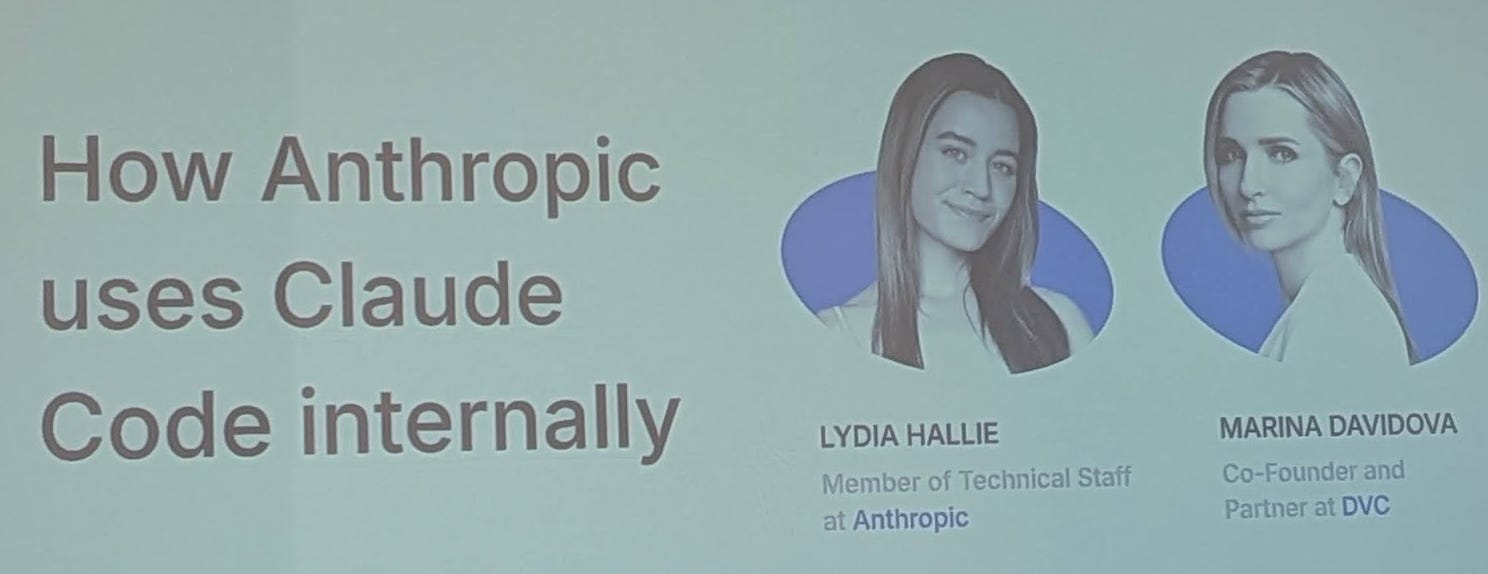
Lydia Hallie gave a great look into how the Anthropic team uses Claude Code internally. She mentioned Skill atrophy and how teams have morphed their goals.
Workflow reality: Teams are smaller and everyone has high ownership, but human-in-the-loop for PR reviews remains the bottleneck.
To fight permission fatigue, they are focusing on “automode”—using a separate classifier to decide when it’s safe to prompt a user versus acting autonomously.
Psychological shift: Because AI allows us to do so much more, we feel a constant pressure to keep producing. We have to find a healthy balance.
5. Enterprise AI: Moving from Pilot to P&L
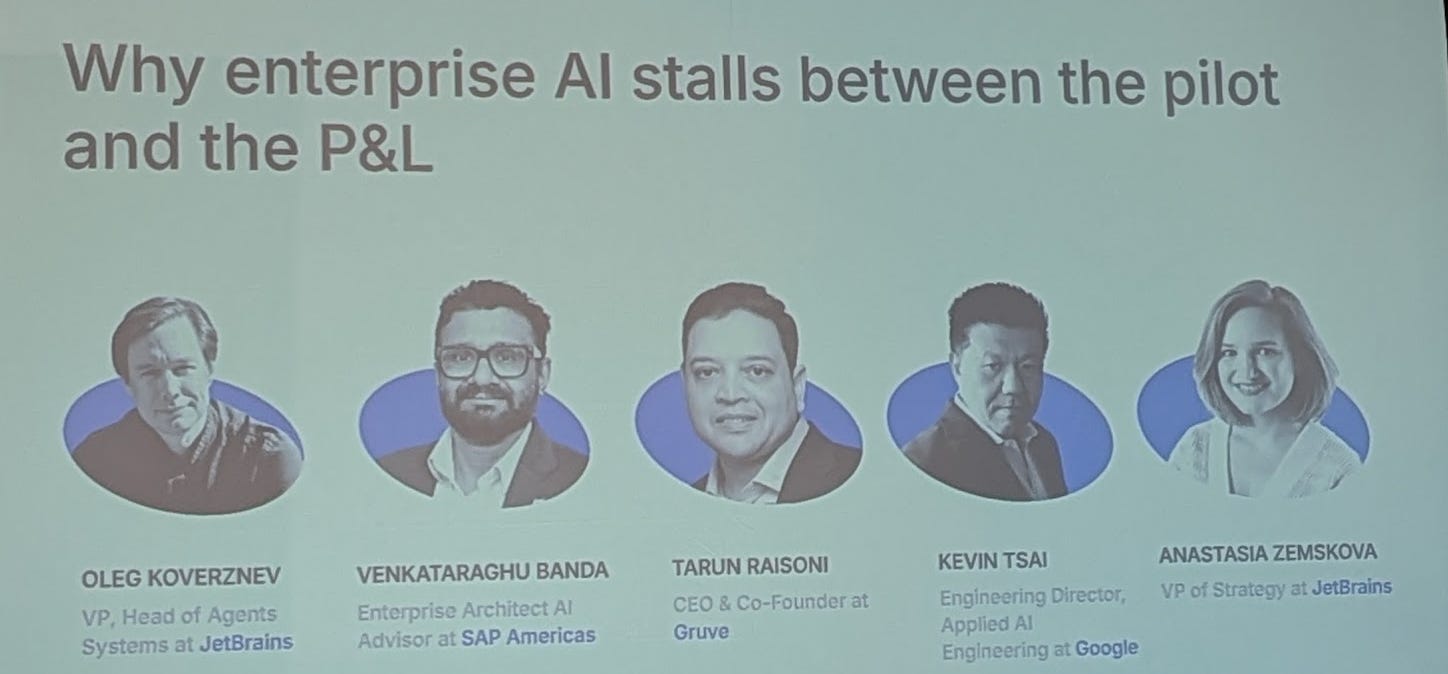
A panel with JetBrains, SAP, Gruve and Google looked at why enterprise AI stalls.
Verdict: Creativity without governance is just slop.
Right now, silos are accidentally building the same things. True success requires balancing individual productivity with organization-wide guardrails, data sovereignty, and clear business outcomes.
In the next 3 years, enterprise success will be measured by a simple triad: Growth, Operational Productivity, and Employee/Customer Retention. We need to achieve all 3 to be a multiplication of force with AI.
Google shared a breakdown for the modern workflow: 70-20-10 Innovation Model
70% is core work, 20% is using AI augmentation to make that 70% better, and 10% is purely tangential—learning entirely new things to be a true game-changer.
6. Interface & AI for “Normies” (Wabi)
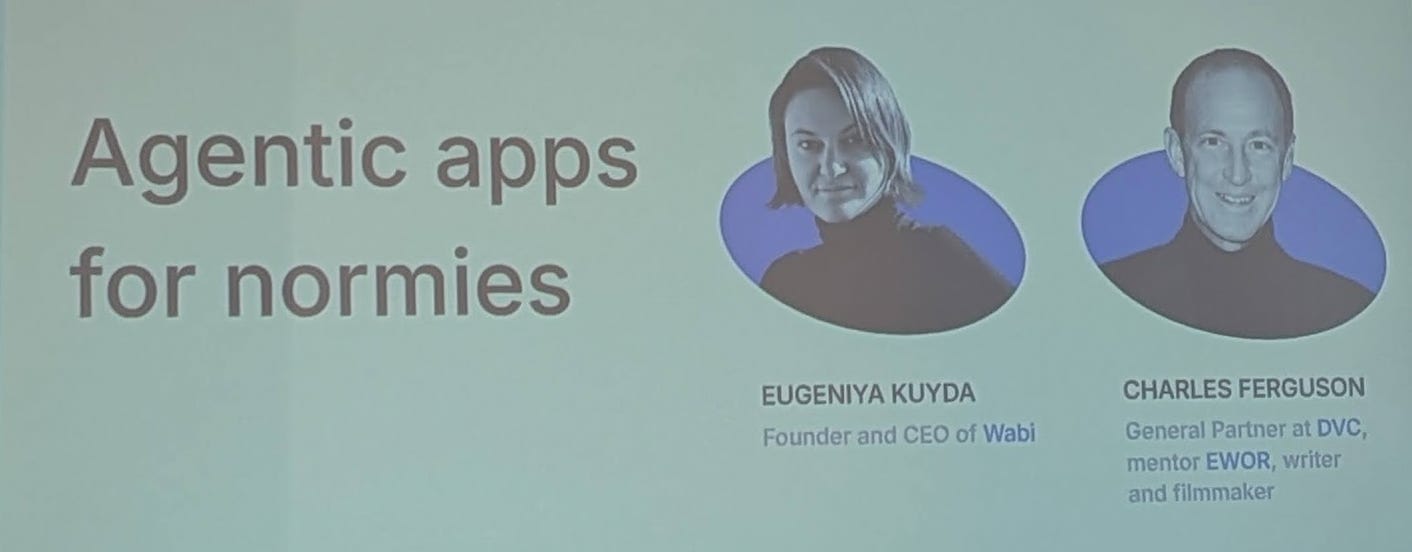
Eugeniya Kuyda introduced Wabi, aiming to be the "YouTube for agentic apps" where every app is agentic and seamlessly combines AI, apps, and data.
Inspired by wabi-sabi, the focus is on custom, imperfect, and highly tailored software (like a quick trip app with friends, fitness trackers, or personal CRMs).
Our bottleneck isn’t model capability; it’s the interface.
Sandbox: Wabi handles the background heavy lifting—including data infrastructure, built-in security, and malicious content moderation. This allows creators to focus purely on building without worrying about databases or traditional App Store distribution roadblocks.
Culture: It’s a play for true freedom, agency, and ownership. By skipping traditional distribution, the platform aims to attract high-tier talent looking to change equity and find immediate discoverability for their ideas.
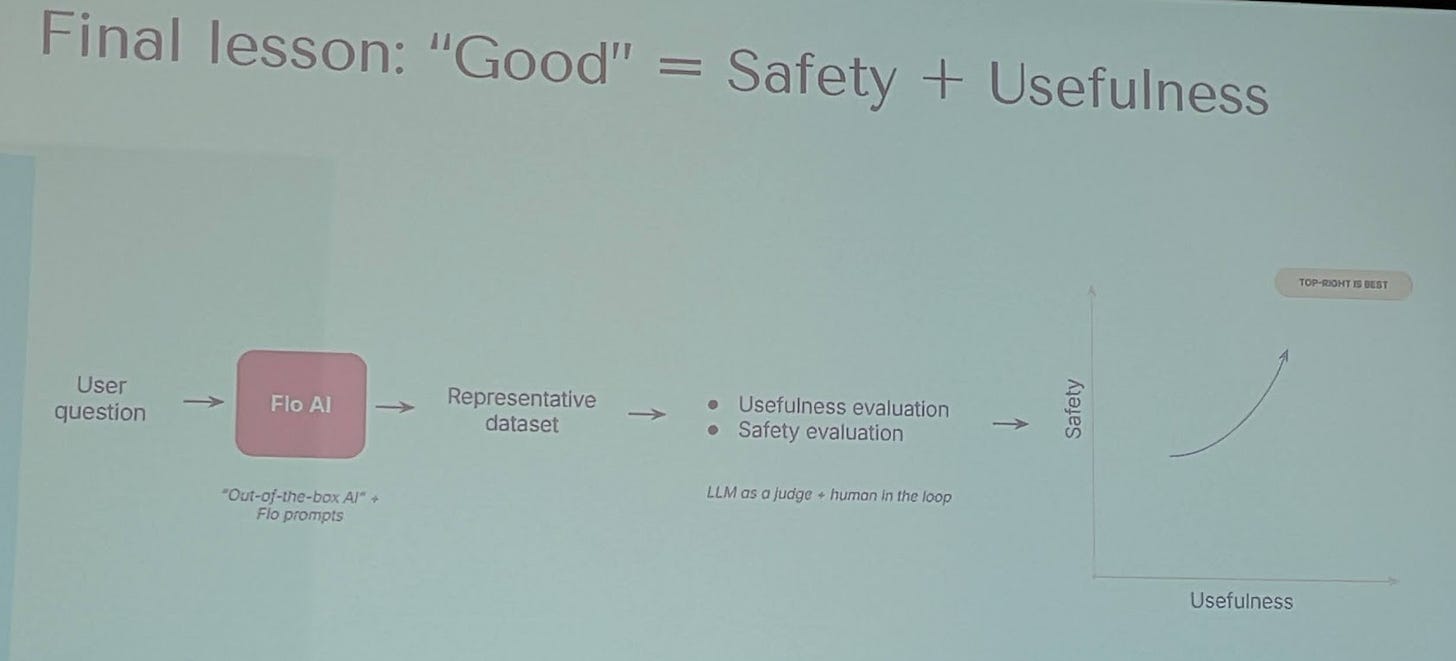
7. Safety & Usefulness in FemTech (Flo Health)
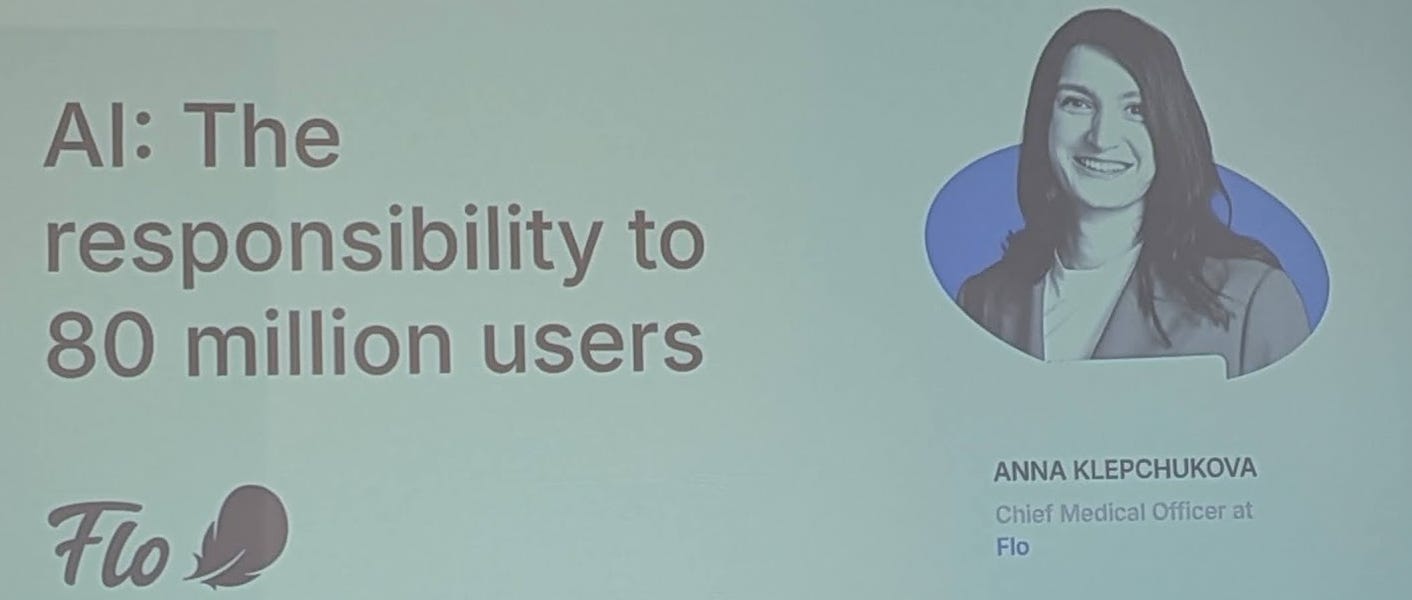
Anna Klepchukova shared a vital reminder: Women’s health data is historically under-researched, so you can’t just use standard models as-is.
To truly get it right and avoid bias, hallucinations, or dangerous inaccuracies, health tech companies have to take ownership and build/vet the data.
Framework: Defining what "good" looks like in health AI is incredibly difficult because there is no universal measure of safety. Flo Health uses a specific framework to navigate this risk:
Test usefulness before safety. Ultimately, Good = Safety + Usefulness.
8. AI without gatekeepers | Decentralized Compute
Interesting session with Keli Callaghan (Arrington Capital) alongside Daniil and David Liberman, Gonka Protocol on breaking the compute monopoly, where three hyperscalers control 70% of global cloud compute.
Incentive: Pure meritocracy based on proof of work / proof of compute (Bitcoin economics). The higher your token output, the more Gonka tokens you earn.
Trade-off: Latency remains the hardest challenge for decentralized compute, even though it is 100x cheaper.
Why it Matters for Builders: Beyond cost, it’s about resilience. If frontier labs decide to gatekeep access, or if country-specific regulations kick in, builders lose overnight.
Blueprint: True decentralization means no kill switch and no absolute control. Updates are decided by committee votes, ensuring the largest compute network remains open and un-censored as we code more with tools like Cursor and Claude Code.
Finding the Balance
Being at the frontier means navigating massive organizational and psychological shifts. Every enterprise is currently challenged by startups that can run faster, but the biggest hurdle isn’t the technology—it’s organizational change. If people in an organization aren’t talking to each other, it’s going to be a struggle.
True success requires finding the right balance between creativity, control, and governance. It’s about how people work with technology, making agentic AI trusted and seamless for the end user. To win, companies must first make their organization adaptable to the current world, then apply AI.
Moving forward, hybrid teams—like pods and triangles working alongside agents—will completely outperform competitors who try to run fast alone. We need to focus on what keeps humans trusted, connected, and working better together.
And stay curious and have fun along the way!
Without Joy, Why do anything.